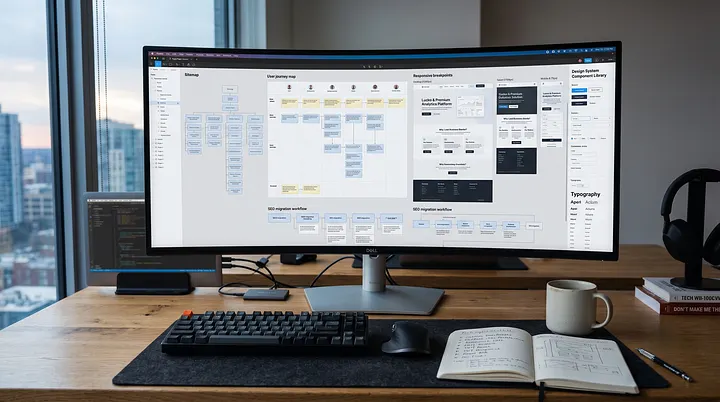
Laravel vs Node.js: Choosing the Right Backend for Your Web App
Choosing between Laravel and Node.js can define your application's success. This guide compares the elegant, security-first approach of Laravel with the high-performance, real-time capabilities of Node.js to help you select the ideal backend for your business goals in 2026.
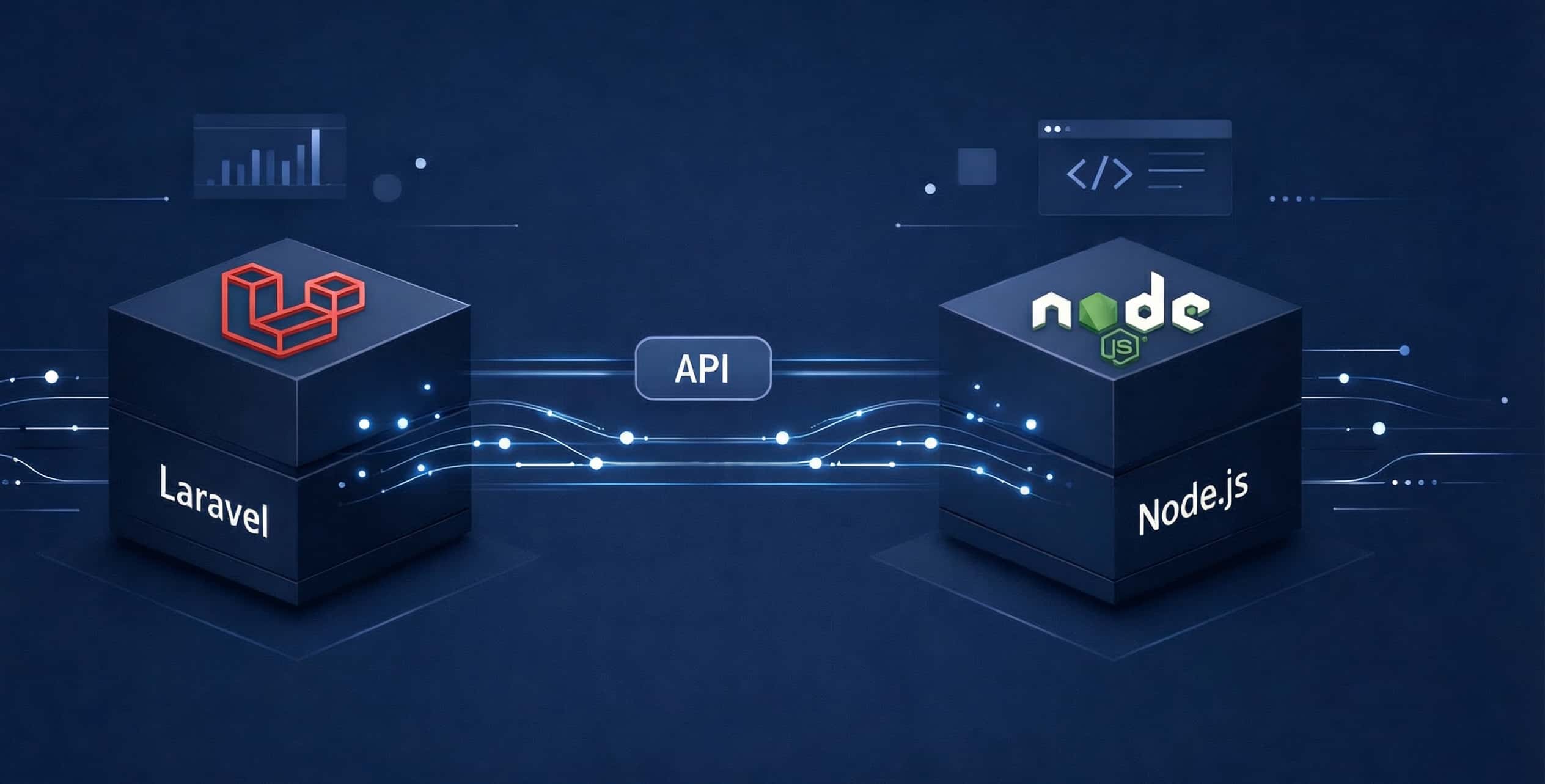
1. Introduction: The Engine Under the Hood
In the world of modern web development, the user interface (UI) is often what grabs the spotlight. However, behind every seamless animation and fast-loading dashboard lies the "backend"—the invisible engine that powers your application’s logic, security, and data management.
Choosing the right backend framework is one of the most critical decisions a business owner or technical lead can make. It’s not just about what works today; it’s about what will scale as your user base grows from one thousand to one million. Today, the debate often centers on two titans: Laravel, the elegant PHP framework, and Node.js, the high-performance JavaScript runtime.
At WebMixStudio, we’ve built countless scalable web applications using both technologies. We understand that there is no "one-size-fits-all" answer. The choice depends on your specific business goals, performance requirements, and long-term vision. In this guide, we will dive deep into the Laravel vs. Node.js comparison to help you choose the right foundation for your digital product.
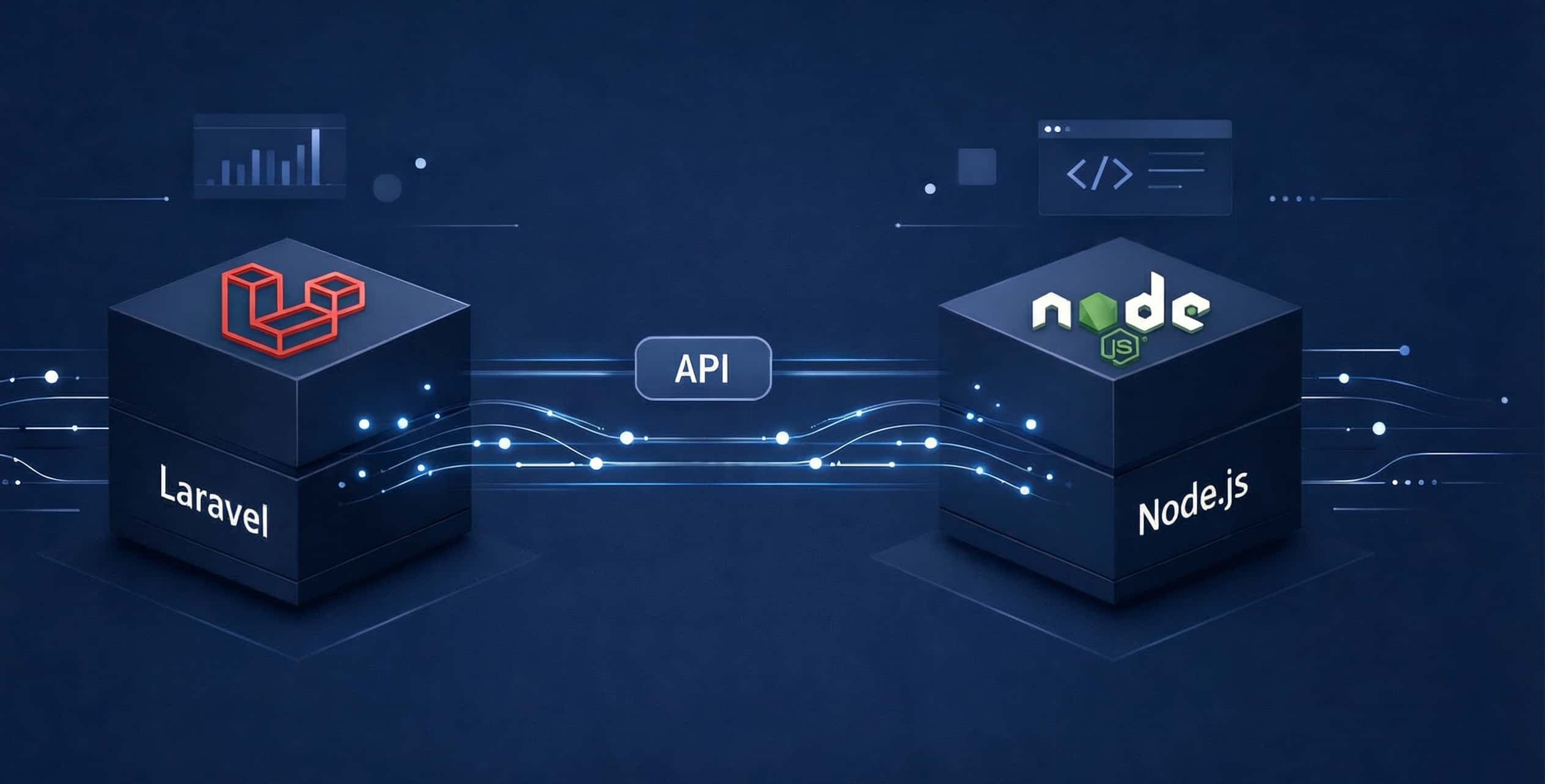
2. What the Service Is: Defining Modern Backend Development
Backend development (also known as "server-side" development) refers to everything that happens on the server to make the frontend of a website function. It encompasses database management, server configuration, and the creation of APIs (Application Programming Interfaces) that allow different software systems to communicate.
Understanding Laravel
Laravel is a free, open-source PHP web framework created by Taylor Otwell and intended for the development of web applications following the model–view–controller (MVC) architectural pattern. It is known for its "expressive" syntax and is designed to take the pain out of development by easing common tasks such as authentication, routing, and caching. According to the Laravel official documentation, it provides a robust set of tools that allow developers to build complex applications rapidly.
Understanding Node.js
Node.js is not a framework, but a cross-platform, open-source JavaScript runtime environment that executes JavaScript code outside a web browser. Built on Chrome’s V8 JavaScript engine, Node.js uses an event-driven, non-blocking I/O model that makes it lightweight and efficient. As highlighted by MDN Web Docs, Node.js is particularly well-suited for data-intensive real-time applications that run across distributed devices.
3. Why Businesses Need a Reliable Backend Technology
A website that looks beautiful but crashes under load is a liability. For businesses looking to maintain a competitive edge, the backend choice directly impacts several key areas:
Scalability and Growth
As your business grows, your application must handle increasing traffic. A well-chosen backend allows for "vertical scaling" (adding more power to a server) or "horizontal scaling" (adding more servers to the network). Node.js is often favored for horizontal scalability, while Laravel’s ecosystem (via tools like Laravel Vapor) makes it highly scalable in serverless environments.
Security and Data Integrity
Data breaches can destroy a company’s reputation. According to Google Developers, security should be integrated into the development lifecycle from day one. Laravel excels here with "out-of-the-box" protection against SQL injection, cross-site request forgery (CSRF), and cross-site scripting (XSS).
Performance and User Experience
In 2026, speed is a ranking factor. A slow backend delays the "Time to First Byte" (TTFB), hurting your SEO-optimized website performance. Node.js is legendary for its speed in handling concurrent connections, making it ideal for chat apps or streaming services.
Third-Party Integrations
Modern apps rarely exist in a vacuum. Whether it’s integrating Stripe for payments, Salesforce for CRM, or Twilio for SMS, your backend must facilitate these connections securely and efficiently.
4. Key Benefits: Laravel vs. Node.js Comparison
To help you decide, let's look at the core benefits of each through the lens of business requirements.
The Benefits of Laravel (PHP)
Feature | Business Impact |
|---|---|
Rapid Development | Built-in features like Eloquent ORM and Blade templating mean faster time-to-market. |
High Security | Standardized security protocols are baked into the framework. |
Rich Ecosystem | Tools like Laravel Forge and Nova simplify server management and admin panels. |
Consistent Structure | The MVC pattern ensures the code is organized and easy for new developers to join the project. |
Learn more about our Custom WordPress & Laravel services.
The Benefits of Node.js (JavaScript)
Feature | Business Impact |
|---|---|
Extreme Performance | The non-blocking I/O is perfect for real-time applications like Uber or Netflix. |
Full-Stack JavaScript | Developers can use the same language for both frontend and backend, reducing team silos. |
Massive Community | According to the Stack Overflow Developer Survey, JavaScript remains the most popular language, ensuring a large talent pool. |
Microservices Ready | Excellent for building modular applications that can be scaled independently. |
Explore how we use Next.js and Node.js for high-performance builds.
5. Process Used by WebMixStudio
Building a robust backend isn't just about writing code; it's about following a disciplined engineering process. At WebMixStudio, we follow a six-stage methodology to ensure your backend is bulletproof.
1. Project Discovery
We begin by understanding your business goals. Are you building a content-heavy portal? A real-time auction site? A fintech dashboard? This stage determines the technical path.
2. Architecture Planning
We map out the data structures, API endpoints, and server requirements. We decide between a monolithic architecture (often great for Laravel) or a microservices architecture (often great for Node.js).
3. Technology Selection
Based on the discovery, we select the specific stack. We don't just pick "what's trendy"; we pick what is sustainable. If your project requires high-speed real-time updates, we lean toward Node.js. If you need a complex business logic engine with high security, Laravel is our go-to.
4. Development & Coding
Our experienced development team writes clean, documented, and testable code. We follow PSR standards for PHP and ES6+ standards for JavaScript.
5. Testing & Optimization
Before any launch, we conduct rigorous load testing and security audits. We optimize database queries to ensure that even with large datasets, your web development project remains lightning-fast.
6. Deployment & Maintenance
We handle the deployment using modern CI/CD (Continuous Integration/Continuous Deployment) pipelines. Once live, we provide managed hosting and maintenance to keep everything running smoothly.
6. Tools & Technologies Used by WebMixStudio
We believe in using the right tool for the job. Our tech stack is curated to deliver performance and reliability:
Databases: MySQL, PostgreSQL, MongoDB (for NoSQL needs), and Redis for high-speed caching.
DevOps & Infrastructure: Docker for containerization, AWS (Amazon Web Services), and Google Cloud for scalable hosting.
Communication: RESTful APIs and GraphQL for flexible data fetching.
Version Control: Git/GitHub for collaborative and safe code management.
7. Why Choose WebMixStudio for Your Backend Development?
Choosing a development partner is as important as choosing the technology itself. Here is why businesses trust WebMixStudio:
Experienced Development Team
Our developers aren't just coders; they are architects. We understand the nuances of both the PHP and JavaScript ecosystems, allowing us to pivot based on your needs.
Scalable & Future-Proof Architecture
We don't build for today; we build for three years from now. Our architectures are designed to be "decoupled," meaning you can update your frontend without rebuilding your entire backend.
Performance-Optimized Applications
We prioritize "Core Web Vitals." By optimizing server-side rendering and database indexing, we ensure your app provides a premium user experience that boosts conversions and SEO rankings.
SEO-Ready Foundations
Search engines love fast backends. Our development approach ensures that your technical SEO is flawless from the moment the first line of code is written.
Ongoing Maintenance & Support
Technology evolves. We provide continuous performance care and security updates, ensuring your business never faces unexpected downtime.
8. Conclusion: Which One Is Right for You?
The "Laravel vs. Node.js" debate isn't about which is better—it's about which is better for your specific use case.
Choose Laravel if you are building a traditional e-commerce site, a CMS, or a business-logic-heavy application where security and rapid development are paramount.
Choose Node.js if you are building a real-time application (like a chat app), a streaming service, or a project requiring a highly scalable microservices architecture.
At WebMixStudio, we specialize in making these complex technical decisions easy for you. Whether you need a full-stack overhaul or a specific backend architecture consultation, we are here to help your business scale.
Ready to build the future of your business?
Don't leave your backend to chance. Let’s discuss your next project and find the perfect tech stack to power your growth.
Book a Free Consultation Call Contact Our Strategy Team
Explore more of our case studies to see how we've helped other businesses succeed with custom web development.
Written By

Webmixstudio
Creative Director at WebMixStudio
WebMixStudio is a modern digital agency specializing in high-performance websites, scalable web applications, and conversion-focused digital experiences for startups and growing businesses.
Keep Reading
More insights from the WebMixStudio team.
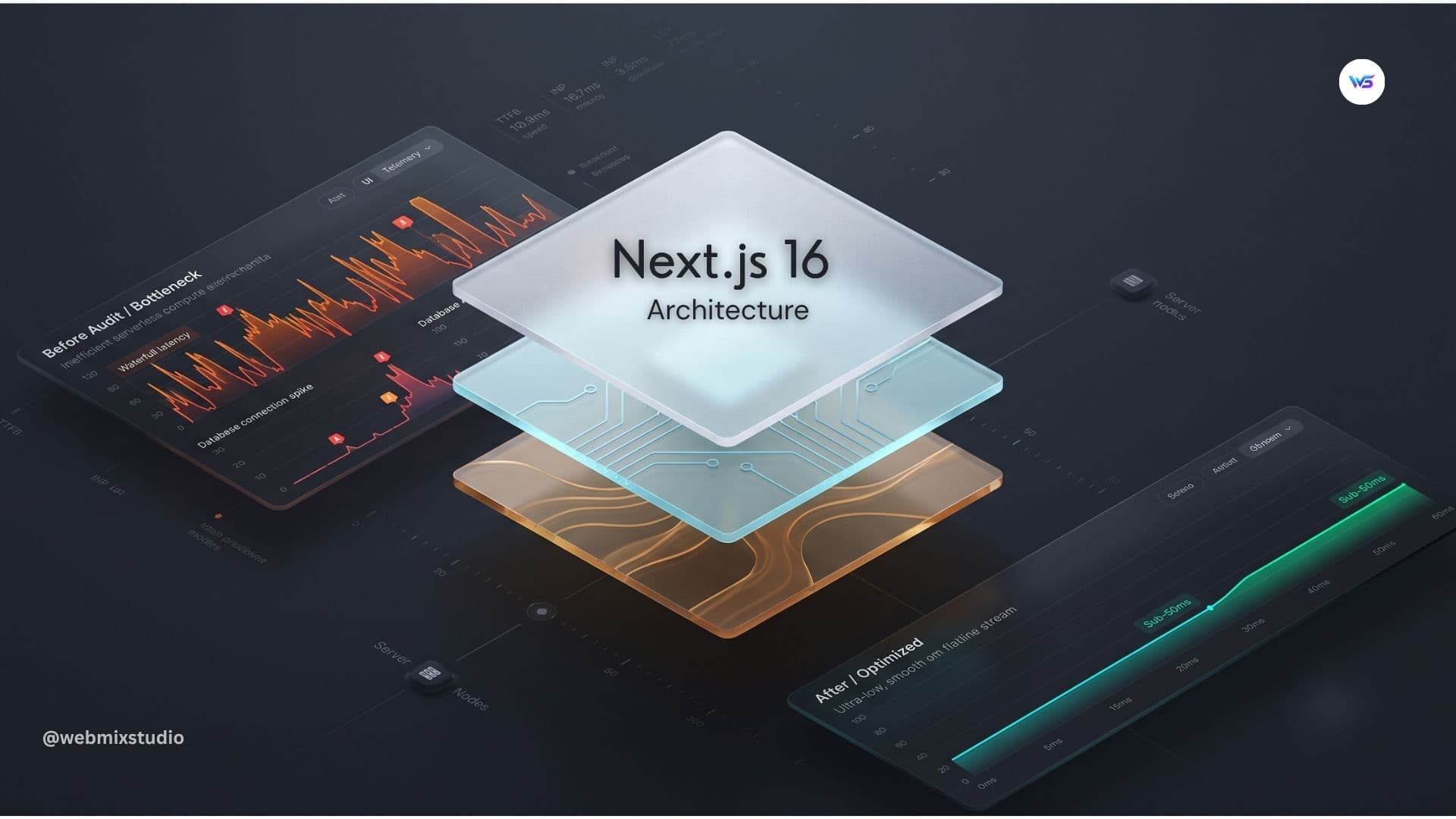
Next.js App Router in Production: 5 Architectural Mistakes Crashing Your Core Web Vitals & Server Costs

The Complete Technical SEO Guide for Developers (2026 Edition)